Portable generators are useful, but they are also one of the most common causes of carbon monoxide poisoning after storms. Carbon monoxide is a gas you cannot see or smell, and it can kill within minutes. Following a few firm rules keeps your household safe.
The rules from the CDC and CPSC
- Never run a generator inside a home, garage, basement, crawlspace, shed or enclosed porch, even with doors and windows open.
- Keep it at least 20 feet from any doors, windows or vents, with the exhaust pointed away from the home.
- Install battery-operated or battery-backup carbon monoxide alarms near every sleeping area, and test them.
- Never ignore a CO alarm. Get everyone outside to fresh air immediately, then call 911.
Know the warning signs
Carbon monoxide poisoning can feel like the flu: headache, dizziness, weakness, nausea, confusion and chest pain. People who are asleep can die before they notice symptoms. If anyone feels sick while a generator or fuel-burning appliance is running, get outside right away.
Other generator safety basics
- Use heavy-duty outdoor extension cords long enough to keep the generator 20 feet away, rated for the load.
- Never plug a generator into a wall outlet ("backfeeding"). It can electrocute utility workers and neighbors. Use a transfer switch installed by a licensed electrician.
- Let the generator cool before refueling, and store fuel in approved containers away from living areas.
- Keep it dry, under an open canopy if needed, but never in an enclosed space.
The same rules apply to other fuel-burning equipment
Charcoal grills, camp stoves, propane heaters not designed for indoor use, and running a car in a garage all produce carbon monoxide. Never use them indoors to cook or heat during an outage.
A safer option for indoors
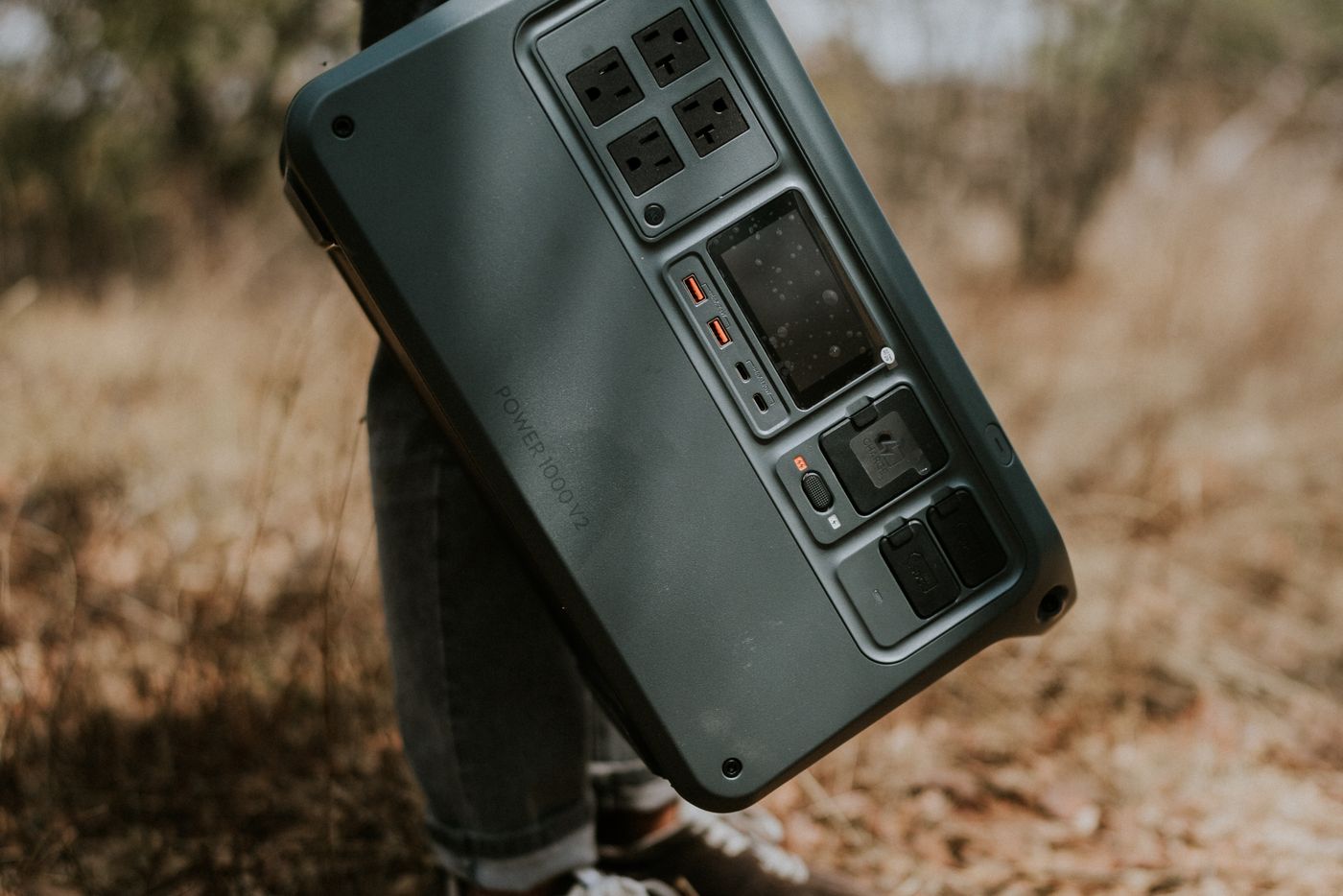
Battery portable power stations produce no exhaust and can be used safely inside, next to a bed or refrigerator. For most households, they cover the essentials of a typical outage: lights, phones, internet, a refrigerator and medical devices. If you face frequent multi-day outages, a power station indoors plus a properly placed generator outdoors is a sensible combination.
Frequently asked questions
How far should a generator be from the house?
The CDC says at least 20 feet from any doors, windows or vents, with the exhaust pointed away from the home. Never run one inside a home, garage, basement, crawlspace or shed, even with doors open.
What are the signs of carbon monoxide poisoning?
Headache, dizziness, weakness, nausea, vomiting, chest pain and confusion, often mistaken for the flu. People who are asleep can die before they notice. If you suspect it, get everyone outside to fresh air and call 911.
Can I plug a generator into a wall outlet?
No. Backfeeding through an outlet can electrocute utility workers and neighbors. Connect a generator to home wiring only through a transfer switch installed by a licensed electrician.
Is there a generator I can safely use indoors?
A battery portable power station produces no exhaust, so it is safe to use indoors. Fuel-burning generators, including inverter generators, must always run outdoors.
Sources
This guide is general information and is not a substitute for advice from emergency officials, medical professionals or your local authorities. Some links on this site are affiliate links; see our disclosure.